Summary: The Valkyrie in Norse mythology is far more than a battlefield handmaiden. From Odin's choosers of t
he Valkyrie does not weep. That's the first thing to unlearn. In the popular imagination, these figures are often reduced to helmeted maidens hovering over battlefields, a kind of Norse angelic host. But the Old Norse texts tell a messier story. They are not merely collectors of the dead;they are agents of fate, with names like Skuld (Debt) and Skögul (Shaker)。and they operate under Odin's command with a chilling pragmatism.Take the poem Grímnismál. Odin lists his Valkyries—Hrist, Mist, Skeggjöld, and others—and their role is explicit: they serve drink to the einherjar in Valhalla. That's the domestic veneer. Peel it back, and you find something stranger. In Darraðarljóð, a poem embedded in Njáls saga。
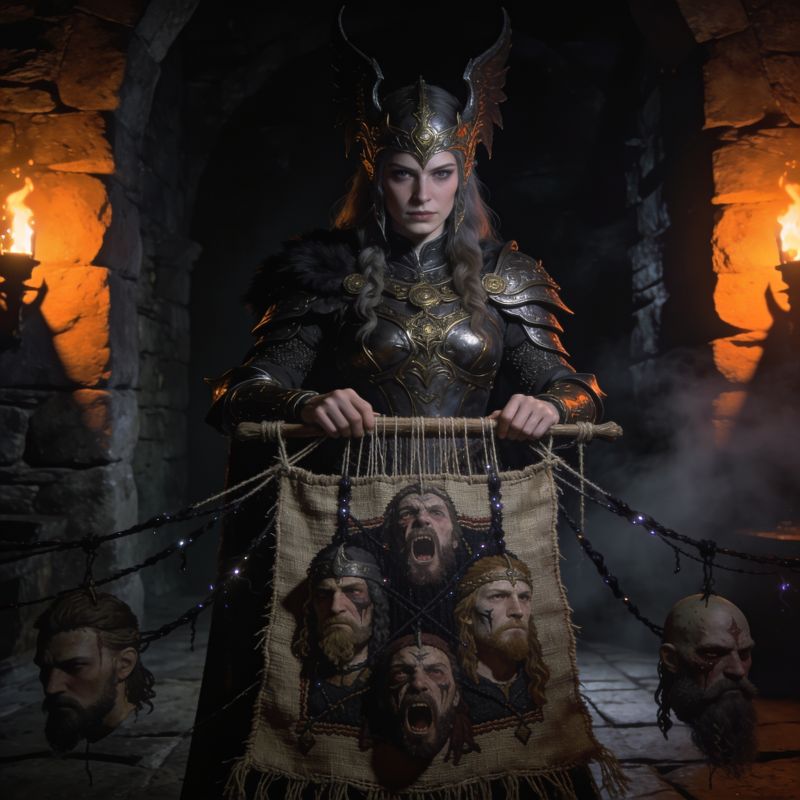
a group of women weave a tapestry of war using intestines and severed heads as loom weights. They are not passive. They are deciding who dies. The Valkyrie here is a worker of wyrd, not a handmaiden.This duality fascinates me. On one hand, you have Brynhildr in the Völsunga saga, a Valkyrie who disobeys Odin, is punished with a ring of fire, and becomes a tragic human queen. On the other。you have the Valkyrie as a symbolic device in skaldic poetry—kennings for battle include 'Valkyrie's storm' and 'the din of Hildr.' The word itself, from Old Norse valr (slain) and kjósa (to choose), is a verb made noun: she who chooses the slain. That choice is not a reward;it's a sentence.Archaeological evidence offers little confirmation. The famous picture stones from Gotland, like the Tjängvide stone, show a female figure with a cup greeting a rider。likely a Valkyrie welcoming a dead warrior. But whether real women ever enacted this ritual remains speculation. What we do know is that the Valkyrie's image shifted with Christianization. By the late Middle Ages, she becomes a romanticized figure in ballads, her ferocity softened into something closer to a fairy-tale messenger.
Why does this matter now?Because the Valkyrie exposes a medieval discomfort with female authority. She is powerful but ultimately subordinate to Odin's will. She selects warriors but never fights in the primary texts. That contradiction is the point. When I read the Eddas, I don't see a symbol of liberation or a simple emblem of death—I see a culture negotiating the frightening idea of a woman with a deciding vote. The Valkyrie is a fascinating lens through which to view that negotiation.